Tuesday, September 28, 2010
Writing


Tuesday, September 21, 2010
Brits Have All The Fun
I'm reading the new book from one of my favorite writers: THE SKIN MAP by Stephen R. Lawhead. I'm loving it for many reasons. The story is pushing the limits of high concept ideas. The characters are funny, likeable, a joy to read. There is danger, mystery, and pubs.
 While all this is good and swell, what's really charming me is the british accent of the book. I don't know how they get away with it, but the Brits seem to be able to break writing "rules" that us Americans have to follow under penalty of death, or worse, rejection.
Adverbs, for instance. Nearly every single "how to write" book out there tells you to chop adverbs from your writing as though they were cancerous growths. That doesn't stop Lawhead or Neil Gaiman from using them happily, excitedly, thickly.
Also, apparently Brits don't have to spell things correctly. They can have a character analyse a full-colour catalogue that features a centre-spread advertisement about the theatre, and their editors won't even blink an eye.
British people sound cool.
The BBC produces awesome television.
 Finally: tea. Tea with breakfast, tea with lunch, tea with dinner--oh, and don't forget tea time. Drinking tea makes us Americans feel important, comfortable, and sophisticated. Brits drink tea because they like it. They already feel comfortable about their important sophistication.
Oh!--I hear the teapot singing. I best be off. Till next time, chap!

Adverbs, for instance. Nearly every single "how to write" book out there tells you to chop adverbs from your writing as though they were cancerous growths. That doesn't stop Lawhead or Neil Gaiman from using them happily, excitedly, thickly.
Also, apparently Brits don't have to spell things correctly. They can have a character analyse a full-colour catalogue that features a centre-spread advertisement about the theatre, and their editors won't even blink an eye.
British people sound cool.
The BBC produces awesome television.

Oh!--I hear the teapot singing. I best be off. Till next time, chap!
Tuesday, August 31, 2010
Ideas
So yesterday I sent off the first fifty pages of my "chick lit thriller" to my agent. I have no idea what she is going to think. Will she love it? Hate it? Tell me I have no business trying to write first-person female characters?
Who knows.
While I wait for her response, I was contemplating what I should work on. I could just plunge ahead and write the rest of the book, but if she suggests any major changes to the characters or plot, I'd rather implement those now instead of have to change everything later.
I was contemplating, and then the thing happened that every writer lives for: A NEW BOOK IDEA!
These can come out of nowhere. They usually hit like a pummel stone brick between the eyes. BAM! You can't stop thinking about it. It consumes you. My wife and I spent at least an hour talking about the story, fleshing out the characters and the plot. I can't get it out of my head.
I must write it.
These are some images, whether I actually saw them or whether they were in my head, that helped spark and form this new book idea:


Who knows.
While I wait for her response, I was contemplating what I should work on. I could just plunge ahead and write the rest of the book, but if she suggests any major changes to the characters or plot, I'd rather implement those now instead of have to change everything later.
I was contemplating, and then the thing happened that every writer lives for: A NEW BOOK IDEA!
These can come out of nowhere. They usually hit like a pummel stone brick between the eyes. BAM! You can't stop thinking about it. It consumes you. My wife and I spent at least an hour talking about the story, fleshing out the characters and the plot. I can't get it out of my head.
I must write it.
These are some images, whether I actually saw them or whether they were in my head, that helped spark and form this new book idea:

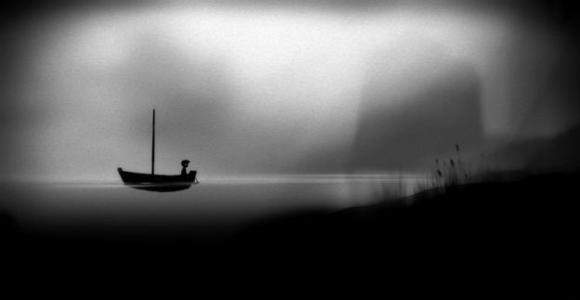


The only way to free myself of these images is to write them. So off I go!
Tuesday, August 24, 2010
More Likeable

When creating a character in a novel, authors will often give the character a hard time to make him or her more likeable to the reader. We sympathize with somebody getting a flat tire, dropping their wallet into the sewer, or having their refrigerator die and all of their food go bad.
It's important to make characters likeable in a novel as quickly as possible. You want your reader to truly care about them so when they are in danger later in the story, the reader isn't rooting for them to get shot.
It's hard to enjoy reading about someone who is depressed, whiny, negative, obnoxious, rude, smelly, and otherwise unpleasant. We deal with those sort of people every day. We might be those people. When we pick up a book, we want to read about someone who has genuine problems but is trying so hard to do their best in spite of them. That makes a hero. That's what we like.
Last night, my family and I were all tired from a long day and ready to settle in for a relaxing evening. Suddenly, we heard the sound of spraying water in the bathroom. Come to find out, a pipe in the wall had cracked and the floor was quickly becoming a lake.
I cut into the wall, cut out the broken piece of pipe, and glued in a new one. Then I stayed up until eleven to let it dry and make sure everything worked. Thankfully, it did.
So today I'm a more likeable character. Somebody out there in a different dimension is reading the novel of my life, and they like me a little more.
Tell yourself that the next time you burn your hair with the curling iron, your washing machine stops working, you run out of gas, or your checkbook bounces. You're a more likeable character now! Happy you!
Tuesday, August 17, 2010
Rated

Everyone is aware of content ratings for movies. We know what PG means, PG-13, R and so forth. We accept this when it comes to movies. Can you imagine what it would be like without this rating system?


So we come to books. Why isn't there a content rating system for books? Should there be?
Here's my thoughts on both of those questions.
It would be very sticky business to give a book a specific rating, such as PG-13, because of the simple fact that so much of a novel's content depends on the reader's imagination. Also, there is a substantial group of people who seem to think that kids should be encouraged to read anything they like in order to broaden their horizons. These people and others would certainly cry foul if the latest popular young adult novel earned a PG-13 rating claiming it questionable for children under the age of thirteen.
Should there be a rating system? I don't think we could or even should implement a strict system to books. There is simply too many gray areas in literature to say that certain descriptions of violence or sensuality are of a level too extreme for a certain age. A writer could mention a women's a low cut blouse and for Reader #1 that doesn't show a thing, but for Reader #2, the book just became a Zack Snyder movie.

Instead, I think it would be appropriate for books to have a brief content description. Perhaps this could be on the inside of the cover somewhere--just a few lines that mention the potentially offensive material in the book. Maybe the book has "Some Language" or perhaps it contains "Strong Language" or maybe it is written by a certain Mr. King and contains "Lots And Lots And Lots Of Not Very Nice Words".
I, for one, would be in favor a simple system like this. I also think parents would appreciate being able to flip open a cover and see that the book their eight-year-old wants to read contains Violence, Language, Sexual Content, And Pervasive Boogers Throughout.
What do you think?
Tuesday, August 3, 2010
Write a Woman Like a Man
It’s official: I’ve lost my mind. I’m going through my day thinking, How would I feel about this situation as a woman? I’m not confused about my gender—oh no siree. So what's happening to me?
I’m writing a book told from the first-person viewpoint of a woman.
I’m writing a book told from the first-person viewpoint of a woman.

I’ve written female characters before, but never like this. I’m totally in this gal’s head. A few days ago, I wrote this sentence:
I don’t hate pink or prada—I am a woman, after all—but there comes a point when too much is too much.
And this little charmer of a paragraph:
I tried to shake it off. I had to assume that it was simply a combination of lack of sleep, the lingering head cold, the tilting of the earth. Growing up, whenever I did something out of the ordinary, my brother would always say I was PMSing. I hated that.

With this novel, I’m not trying to write like a woman. I’m trying to write like a man, but it just so happens that my character is a female. I think I’m finding a balance that both men and women readers would enjoy. That’s my goal anyway.
I want women who like chick lit and women’s fiction to pick this up and love every moment. At the same time, I want men who can’t get enough James Patterson or Dean Koontz to carry this with them on their business trip and stay up too late tearing through the pages.

Who knows—maybe this will be the book that lands a deal and rockets me to bestseller stardom! Maybe I’ll look back at this in ten years and laugh at my naiveté.
Maybe I’ll finally realize that God made me a man for a good reason, and I shouldn’t spend so much time thinking about lipstick.
Maybe.
Tuesday, July 27, 2010
Shorter is Better!
I just don't have time anymore. No time for sleeping, no time for eating, no time for reading, no time for writing blogs. But I make time. I have to. I would never get any writing done if I didn't. 

My writing time is six AM to eight AM. If that alarm blares and I hit snooze, I don't get to write. Plain and simple. It's up to me. It's my fault if I don't get anything done.


I get up and write because I love it. I would like it to become my career someday, and I know if that's going to happen, it's going to take work. So I work at it. It ain't always a picnic, but it's a journey, an adventure. A quest. I'm cool with that.
I'm talking about time because I'm not the only one who doesn't have any. You're a busy gal/guy, and you're thinking, "If James doesn't get to the point soon, I'm going to have stop reading this and get back to work. Or maybe I'll go play Farmville."
I hear ya.
You ever pick a novel and start reading and get twenty pages into it and wonder if the chapter is ever going to end? Is it just me, or do long chapters feel more like work than enjoyment?
In my opinion, short chapters are the wave of the future. James Patterson has obviously picked up on this--you'd be hard pressed to find a new Patterson novel with a chapter more than five pages long.

Whether we admit it or not, our culture is suffering from OCD. We're impatient. We're fidgeters. We want it and we WANT IT NOW!
Short chapters deliver that. They give you a chance to save your spot and put the book down--but wait! If you read only five more pages, you'll be to the next chapter and then--hey, look, the chapter after that is only three pages!

Some people might say that short chapters break up the mood. Some people are wrong. Some people don't have toddlers at home.
I'm a short chapter guy. I like to read short chapters, I like to write them. I'm not ashamed.
What do you like?
Tuesday, July 20, 2010
Video Blog
This is the first of hopefully many video blogs that I will be making. I'd love to hear your feedback. Also, if you have any questions for me relating to writing, reading--anything really--post them here, or on the facebook page, or just send me an email. I'll compile them and answer them in an upcoming video blog.
Enjoy!
Tuesday, July 13, 2010
The End As I Know It
This is up for debate. I might be wrong about this. It would be the third time in my life that I was wrong. The first was that incident with the hair dryer and the cat. The second was that deal about the pickle and the microwave.
This might be the third.
What is the most important part of a novel? The beginning. The plot. The characters. The theme.
No, no, no, no.
It's the end. Don't believe me? Scroll down to the end of this blog. Go ahead. Right now. Scroll away.

Did you do it? What did you find? An unsatisfying, awful ending. Boy, doesn't that make you want to spend another five minutes reading through this blog?
I've been thinking about this lately as I'm putting together proposals for two of my projects. Edits are completed on Book #3, and it is currently in the very qualified hands of my wife for one final read through before it goes back to my agent. Meanwhile, I'm trying to convince an editor that they should risk it all to publish this thing. I have only a few pages to do so. In those pages is something called a synopsis.
A synopsis is a simple thing, really. It's the entire book crammed into three to five pages. This is so the editor knows what's going to happen, so they know you aren't going to get all Space Odyssey 2001 on them.

Writers worry themselves to death over these things. It's painful to read a single sentence that comprises fifty pages of your novel.
But what about the passion! What about that witty line in there! If the editor only reads the synopsis, they will never see how brilliant I am! It isn't fair!
The ending is hardest, just like it is in the full-length novel. My third book is complex and packed with symbolism. I think the ending is quite powerful. How to convey that in thirty seconds or less? No matter what I do, it's going to look flat in comparison.
Such is life.

And so, to defend my theory about the importance of The End. . . . When reading a novel, there is one destination: the last page. The end is the echo that stays with you. When you see that book on the shelf, you will remember what happened in those last few pages, because those are the words most fresh in your mind.
Endings are tricky business. Do you sum up everything? Do you dare write the tragic death of a main character? Do you wait until the very last moment to pull out a massive twist?
There are so many ways to do an ending right, and many more to do it wrong.
I'm thinking about endings, and as I prepare to dive into Novel #5, I'm also thinking about beginnings. Being a writer, your mind is always starting something that you will one day be forced to end. It's bitter, it's sweet, it's all confusing and beautiful, I suppose.
Maybe I'm wrong. I'm still trying to understand this great big world of words, trying to see what makes readers tick, trying to tell stories that entertain but offer something more.
Well, this I know is true. I'm not happy with a novel if . . .

THE END IS UNSATISFYING AND AWFUL!
Tuesday, July 6, 2010
So Sorry

Dear Big Name New York Publisher,
Thank you for you recent offer to publish my book, The Novel. After careful consideration, I'm going to have to pass.
Your offered advance of one million dollars, while certainly generous, is a clear example of your inability to discern quality fiction. While I agree that The Novel does have certain merits, it is in no way worthy of such a large sum.
I am quite frankly disturbed that you would go so far as to call The Novel “The best thing to come across my desk in years.” If this is truly the case, I would wonder if you have been checking your mail, and if you even have a desk at all.
Furthermore, you go on in your five-page letter to express your excitement over the wide appeal of The Novel. I can see how you would think that women and men could enjoy the book equally, but teenagers and children as well? Did you even read the manuscript?
I was shocked to read the line, “We think you as a writer have the potential to be the next great American novelist.” It becomes more and more clear that you did not take the time to clearly examine The Novel or myself.
Lastly, and most offensively, you had the audacity to send a copy of The Novel to Stephen King, who—you claim—gave it this endorsement: “Never before have I been so taken by a book as I was by The Novel. Mark my words, this will be the classic of our times, perhaps the greatest book written this century, or ever. I am in awe.” Obviously you paid Mr. King a great deal of money to compose such lies.
Your offer to publish The Novel is rejected in light of clear disregard for quality fiction, your pie-in-sky predictions about the book and about me, and your juvenile use of subterfuge to influence the reading public.
I wish you the best as a publisher, and might suggest that you take more time in the future to properly consider submissions that come your way.
Sincerely,
Wanna Be Published
Subscribe to:
Posts (Atom)